
Not a big fan of drama, unless it’s on Netflix or a beautiful stitch. And today’s stitch is both dramatic and beautiful. And not for an area you want to keep quiet.
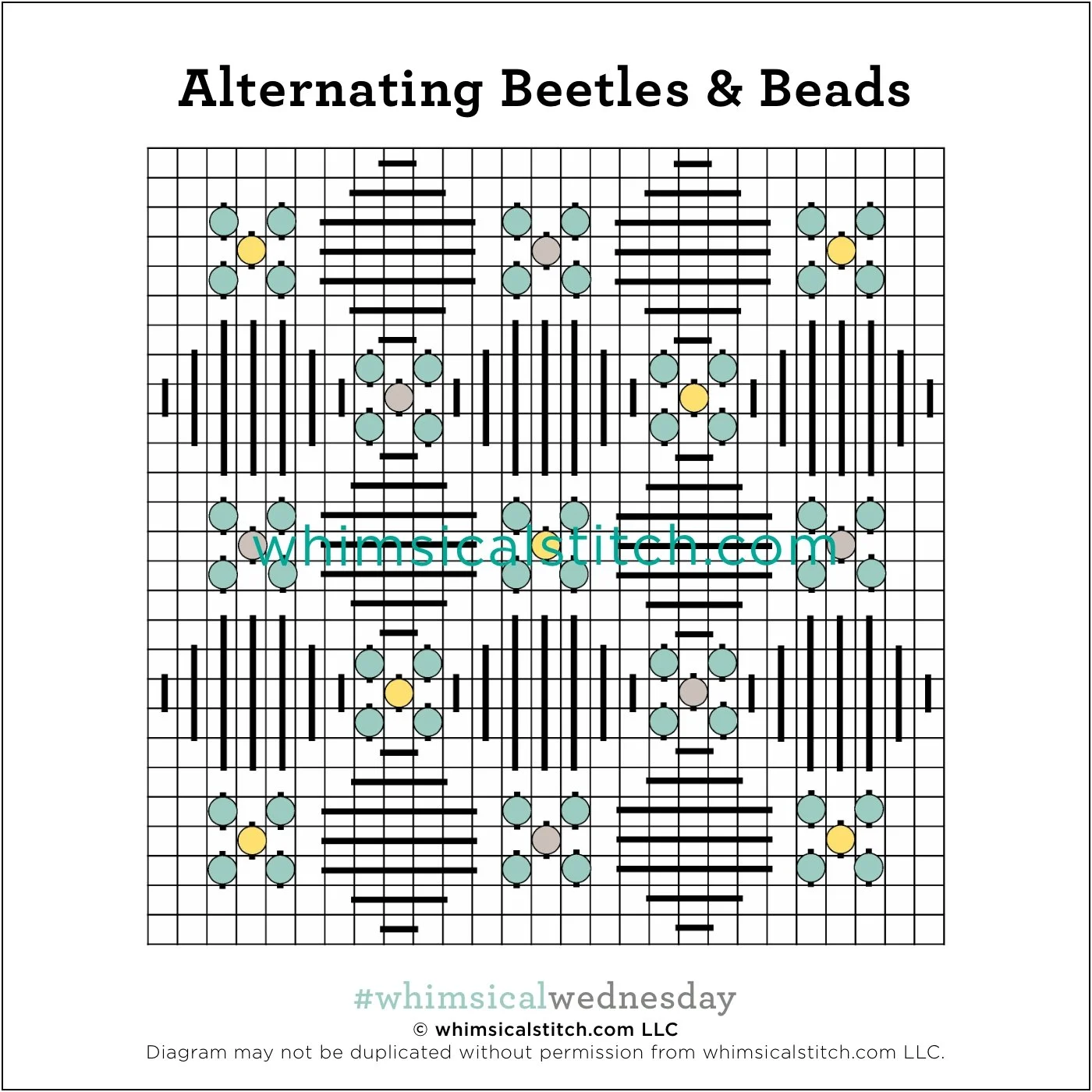
Click on the image to see it on Pinterest. Visit pinterest.com/whimsicalstitch/whimsicalwednesday for a library of all #whimsicalwednesday and #smallspacesunday stitch diagrams.
Click the image to see #whimsicalwednesday and #smallspacesunday Stitched Sample Gallery on Instagram
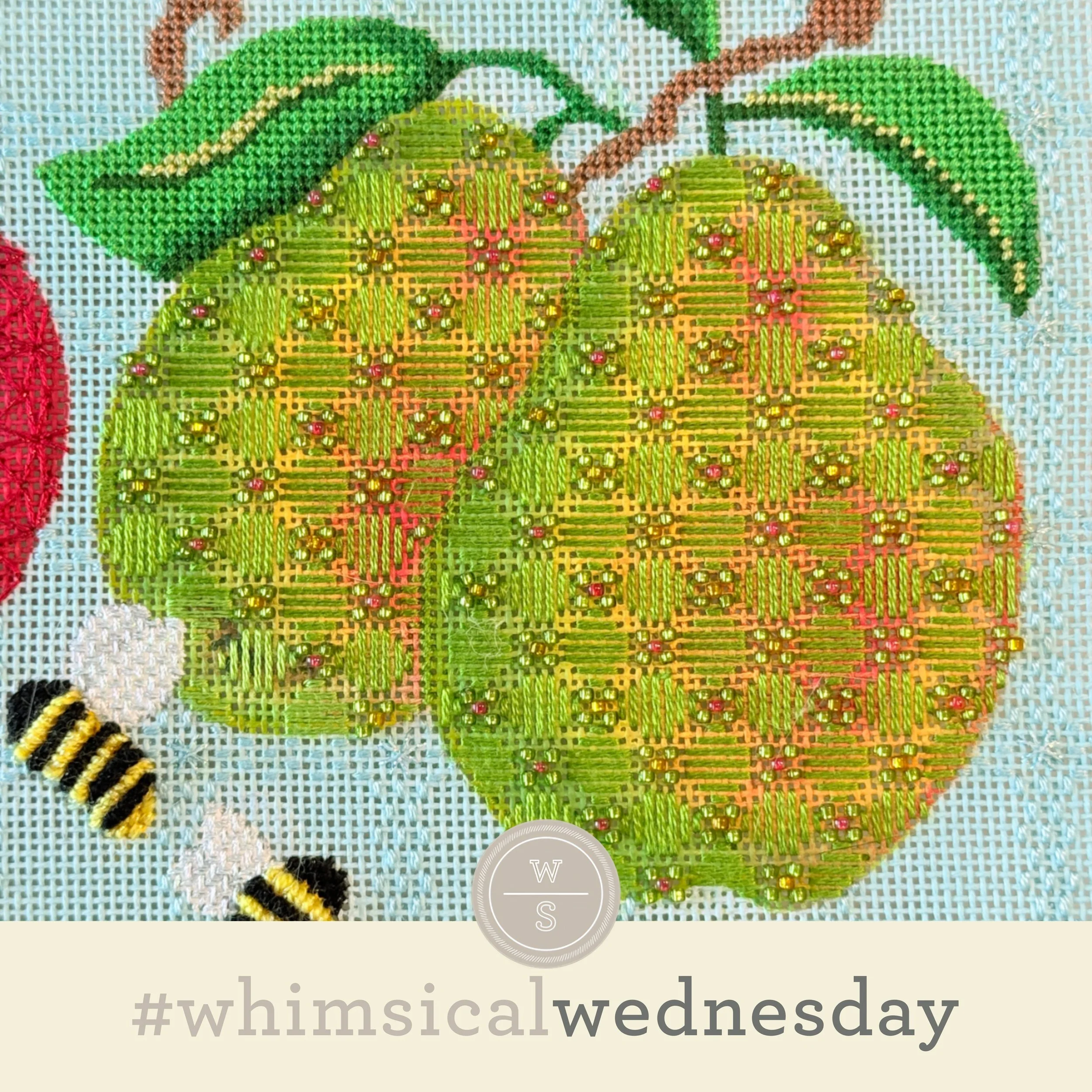
I played around (a lot) to create today’s stitch, using two plies of silk floss (black lines) and three colors of Sundance beads (aqua, gray, and yellow circles) to enhance a beautifully painted pear by Melissa Shirley.
This stitch also illustrates the versatility of floss (silk or cotton). Using basketweave and continental as a guide, a general standard for floss is four plies for 18M and six plies for 13M for full coverage. Over the years, Ruth Schmuff has taught me again and again how floss can do so much more, especially with decorative stitches. Changing a thread's weight to reduce its coverage gives you the best of both worlds. If I had used four plies of floss for the black lines above, I would have had a very strong green focus with little to no visibility of the painted canvas between the straight stitches. Floss was built for this. Using fewer plies of floss for basketweave and continental pushes in those areas lets them recede a bit, drawing more attention to the more dramatic areas. Floss is one of the beautiful threads that can enchance beautiful painting.
A Note about Diagrams
I use colored lines to make diagrams as clear as possible. The primary function is to illustrate a stitch sequence. For example, the layering of colors demonstrates that you add them in that order. They also represent ideas for integrating additional threads (one line per color). Or, you can use the same thread for all color lines. That's where I encourage you to use your imagination for your project.
Click on image to see the whimsicalstitch.com Stitch Library on pinterest.com. Includes all #whimsicalwednesday and #smallspacesunday stitch diagrams.
Evaluating Stitches for Your Project
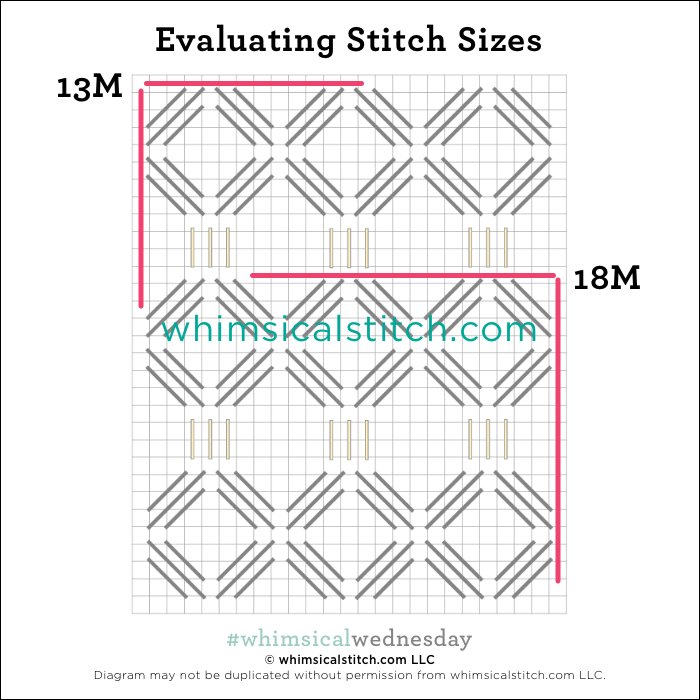
As you are auditioning stitches (from any stitch source), count the number of canvas threads on the diagram that match your mesh size. And there you have what an inch of the stitch will look like. Evaluate it against the area where you plan to use the stitch, then make your final decision. If you start integrating this step into your stitch selection process, you may be surprised at how many stitches you think are large are much smaller than you realize.
Today’s stitch diagram, along with all other #whimsicalwednesday and #smallspacesunday stitch diagrams, can also be found on a Pinterest board here. Be sure to follow whimsicalstitch.com on Facebook, Pinterest, and Instagram.
Happy #whimsicalwednesday!
A Note about Stitch Names
I am absolutely loving the rising popularity of needlepoint, and if you are new to the blog, I want to take a second to chat about stitch names (again). TLDR: Don’t overthink them.
Many stitch names in my blog and books are made up out of whole cloth. When I launched my blog in 2015, I searched high and low for proper stitch names and found stitches with no names or identical stitches with two or more names from different sources. I quickly learned to focus on the diagrams, which I think are prettier (and more important) than any name. A stitch by any other name is still just as interesting!
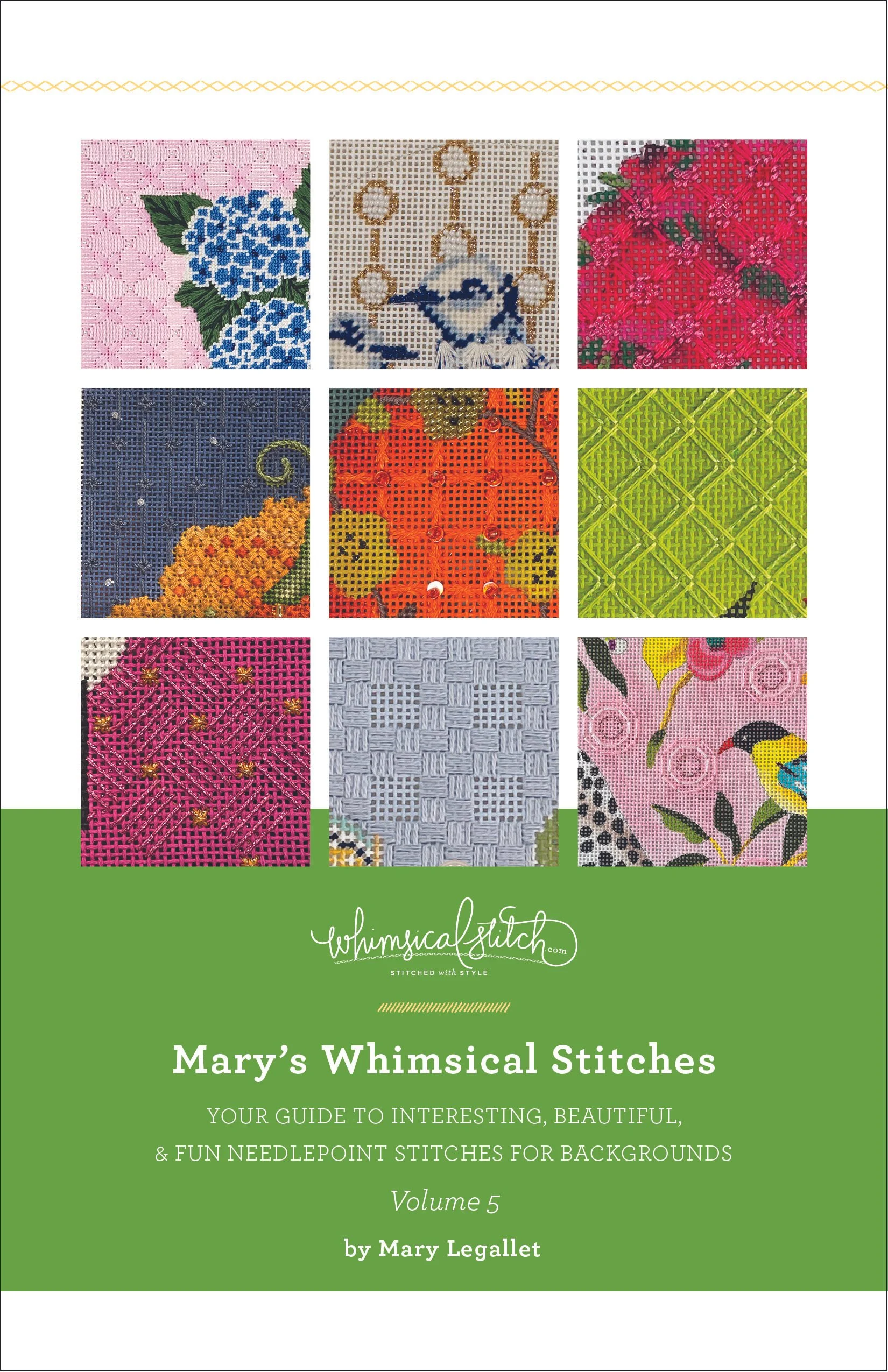
Arriving at stores now!
Speaking of backgrounds, my latest book is in stores now! (And, no, this stitch is not in it.) Mary’s Whimsical Stitches Volume 5 is dedicated to background stitches of all sizes and shapes.
Packed with over 150 stitches, Volume 5 offers you the widest variety of backgrounds. There are large backgrounds, small backgrounds, and everything in between. And more than 75% of the stitches will have a QR code taking your customers to a stitched sample.
More from whimsicalstitch.com
If you like what you see on this blog, there's more. Mary’s Whimsical Stitches is a series of five books offering contemporary how-to collections of stitches for stitchers of all skill levels. All books include updated and sequenced diagrams from this blog, plus a collection of all-new stitches from private lessons and other class projects. Visit here to find a needlepoint retailer that carries my books.
New to needlepoint or looking for a refresher? Please download a handy how-to guide covering basic needlepoint stitches and stitch compensation techniques, along with new top-line information on needlepoint materials and tools, how to handle threads, and other helpful needlepoint resources.